
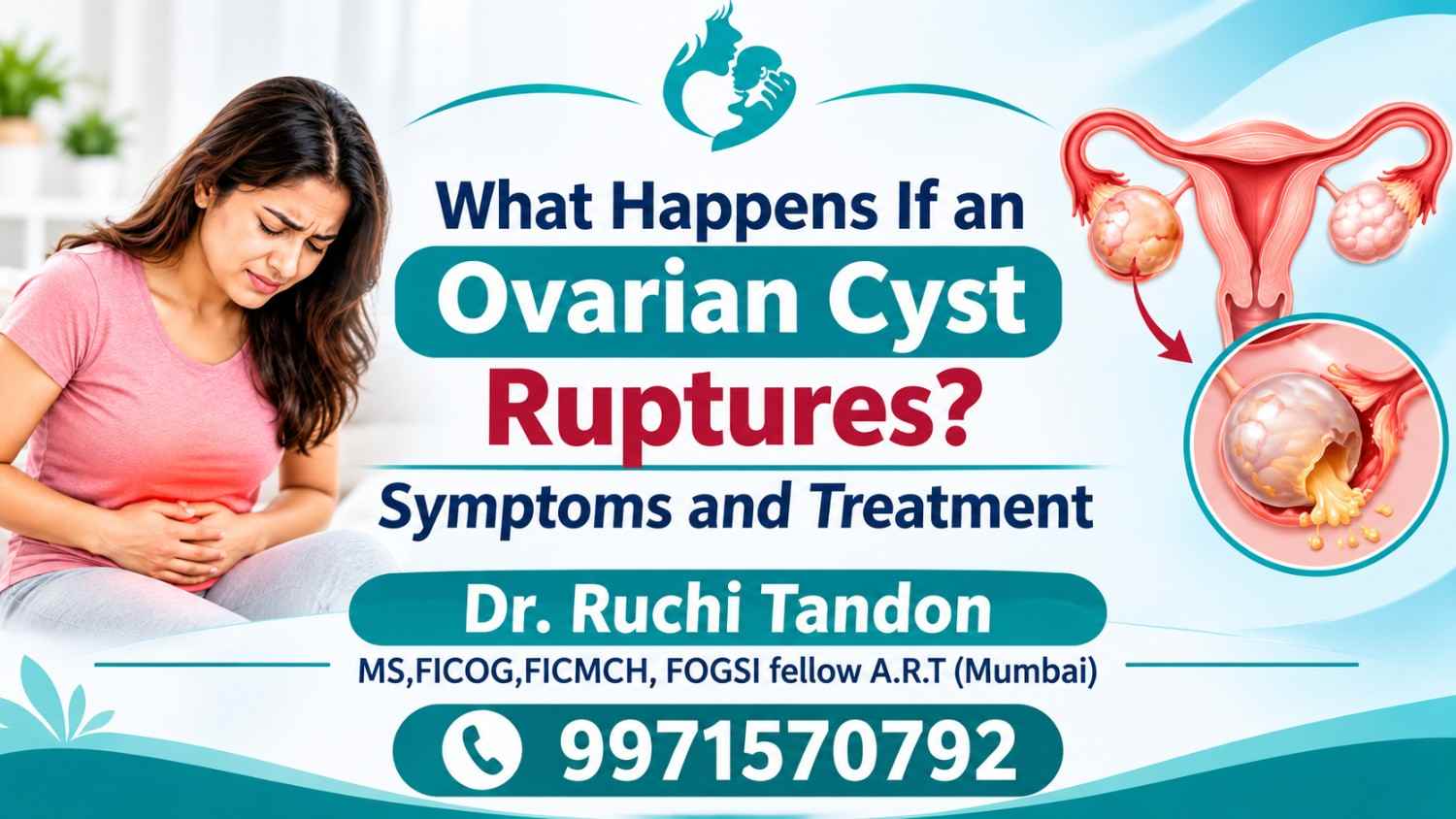
What Happens If an Ovarian Cyst Ruptures Symptoms and Treatment

best ovarian cyst doctor in South Delhi

Ovarian cysts are fluid-filled sacs that develop in or on the ovaries. While most are harmless and disappear naturally, some may rupture and cause sudden pelvic pain or other complications. Knowing the warning signs can help women seek timely medical attention. If you experience unusual abdominal pain, consulting the best ovarian cyst doctor in South Delhi can help identify the cause and determine the appropriate treatment.

What Happens When an Ovarian Cyst Ruptures?

An ovarian cyst ruptures when its outer wall breaks, releasing fluid or blood into the surrounding pelvic area. Some ruptures cause mild discomfort that improves on its own, while others can lead to internal bleeding and require emergency treatment.

A rupture may occur spontaneously or sometimes after strenuous exercise or sexual intercourse. The severity depends on the cyst’s size, type, and whether bleeding or other complications develop.

Common Symptoms of a Ruptured Ovarian Cyst

Symptoms can vary from one woman to another. Some may experience mild discomfort, while others develop sudden, intense pain.

Common warning signs include:

  • Sudden pelvic pain: Sharp pain in the lower abdomen, often on one side.
  • Abdominal bloating: A feeling of fullness or swelling in the abdomen.
  • Nausea and vomiting: These may accompany severe pain.
  • Vaginal spotting: Light bleeding may occur in some cases.
  • Dizziness or weakness: These symptoms may indicate significant internal bleeding.
  • Fever: This may suggest an infection or another complication.

Important: Sudden, severe abdominal pain, fainting, marked dizziness, heavy bleeding, fever, or persistent vomiting require immediate medical evaluation. Do not wait for the symptoms to subside.

Symptoms and Treatment at a Glance

Symptom or Condition Possible Treatment or Action
Mild pain with stable symptoms Observation and prescribed pain relief
Persistent pelvic pain Medical examination and ultrasound
Nausea or vomiting with pain Urgent medical assessment
Significant internal bleeding Hospital treatment and possible surgery
Suspected infection Medical evaluation and appropriate medication


How Is a Ruptured Ovarian Cyst Treated?

Treatment depends on the severity of the rupture and the woman’s overall health.

Observation and Pain Management

If the rupture is uncomplicated and there is no significant bleeding, the doctor may recommend observation, rest, and suitable pain medication. Follow-up may be necessary to ensure recovery.

Diagnostic Tests

A pelvic examination, ultrasound, and blood tests may help assess the cyst, detect internal bleeding, and rule out other conditions, including ectopic pregnancy.

Hospital Treatment or Surgery

Severe bleeding, persistent pain, or other complications may require hospital admission. In selected cases, laparoscopic surgery is performed to control bleeding or remove the cyst while preserving healthy ovarian tissue whenever possible.

When Should You Consult a Gynaecologist?

Do not ignore recurring pelvic pain, unusual menstrual changes, or persistent abdominal discomfort. Seeking advice from the best gynaecologist in Green Park Delhi can help you understand your symptoms and explore suitable treatment options.

Regular check-ups and recommended ultrasound scans can also help monitor ovarian cysts and identify changes that need attention.

Conclusion

A ruptured ovarian cyst does not always lead to serious complications, but severe symptoms should never be ignored. Early diagnosis and appropriate treatment can help prevent complications and support recovery. If you are experiencing persistent pelvic discomfort or have concerns about ovarian cysts, consult the best gynaecologist doctor in South Delhi for an individual assessment and guidance tailored to your needs.
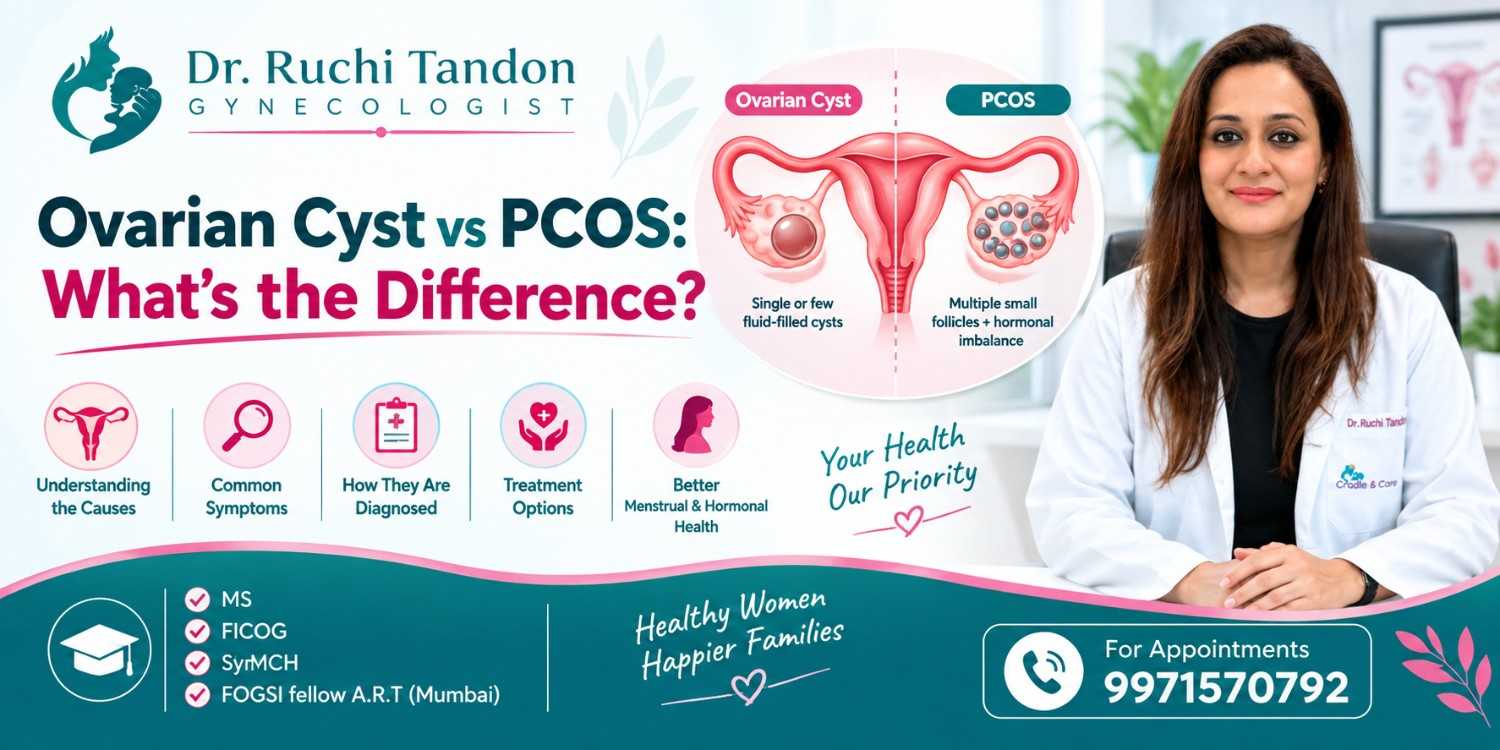
Ovarian Cyst vs PCOS: What’s the Difference?

best ovarian cyst doctor in South Delhi

Ovarian cysts and PCOS (polycystic ovary syndrome) are often confused because both can involve the ovaries and may cause irregular periods. However, they are different conditions with different causes, symptoms, and treatment approaches. If you are experiencing persistent pelvic discomfort, irregular cycles, or concerns about an ovarian cyst, consulting the best ovarian cyst doctor in South Delhi can help determine the underlying cause through a detailed evaluation.

What Is an Ovarian Cyst?

An ovarian cyst is a fluid-filled sac or, in some cases, a solid or mixed mass that develops in or on an ovary. Many ovarian cysts are functional, meaning they develop as part of the normal menstrual cycle. In most cases, these cysts are harmless and may not require any treatment.

Some cysts, however, can become large or cause symptoms such as pelvic pain, abdominal fullness, painful periods, or discomfort during intercourse. Certain types of cysts, including endometriomas and dermoid cysts, may require closer monitoring or treatment.

Diagnosis usually involves a medical history, pelvic examination, and ultrasound. The appropriate management depends on the cyst’s type, size, appearance, symptoms, and the woman’s age and reproductive plans.

What Is PCOS?

PCOS is a hormonal and metabolic condition that can affect ovulation, menstrual cycles, androgen levels, and metabolism. Women with PCOS may experience irregular or infrequent periods, acne, increased facial or body hair, difficulty with ovulation, or weight-related concerns.

Despite its name, having multiple follicles on the ovaries is not by itself enough to diagnose PCOS. A healthcare professional considers the overall clinical picture, including symptoms, menstrual history, hormone-related findings, and sometimes ultrasound results.

If irregular periods or symptoms suggestive of hormonal imbalance continue, consulting a PCOS doctor in South Delhi can help establish an appropriate diagnosis and management plan.

Ovarian Cyst vs. PCOS – Key Differences.

Feature Ovarian Cyst PCOS
What it is A cyst or sac in/on the ovary A hormonal and metabolic disorder
Main concern Cyst characteristics, size, and symptoms Ovulation, hormones, and metabolic health
Period changes May occur with some cysts Commonly irregular or infrequent
Ultrasound May show a distinct cyst May show increased ovarian follicles in some women
Treatment Observation, medicines, or surgery depending on the cyst Lifestyle measures and medicines based on individual needs


Can PCOS Cause Ovarian Cysts?

Now this is a bit confusing. PCOS does not simply mean having ovarian cysts. The ovaries of some women with PCOS may contain numerous small follicles, but these are not the same as a typical ovarian cyst.

The best gynaecologist doctor in South Delhi will generally assess symptoms, menstrual patterns, medical history, examination findings, and relevant investigations rather than relying on an ultrasound finding alone.

When Should You See a Gynaecologist?

Medical evaluation is particularly important when periods remain irregular, pelvic pain persists, symptoms suddenly worsen, or an ovarian cyst has already been identified. Sudden severe pelvic or abdominal pain, especially with vomiting, weakness, or fainting, requires prompt medical attention because complications such as ovarian torsion or cyst rupture can sometimes occur.

For women seeking the best gynaecologist in Green Park Delhi, an individualized assessment can help distinguish PCOS from an ovarian cyst and identify whether monitoring, medication, lifestyle management, or another treatment approach is appropriate.

Conclusion

Ovarian cysts and PCOS may both involve the ovaries, but they are not interchangeable diagnoses. An ovarian cyst is a structural finding, while PCOS is a broader hormonal and metabolic condition. Understanding the difference can prevent unnecessary worry and help ensure appropriate treatment. If you have persistent menstrual changes or ovarian-related symptoms, a qualified gynaecologist can guide you through the necessary evaluation.