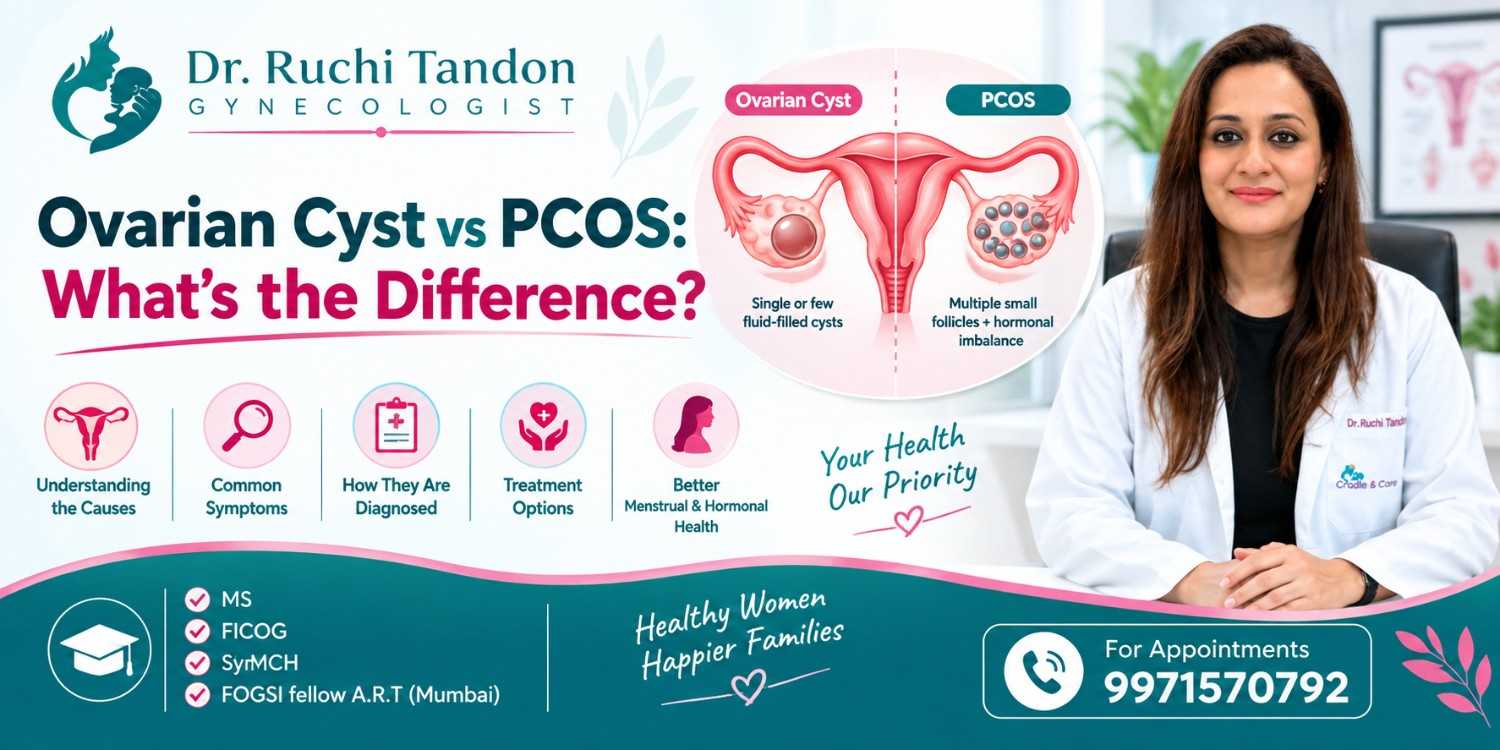
Ovarian cysts and PCOS (polycystic ovary syndrome) are often confused because both can involve the ovaries and may cause irregular periods. However, they are different conditions with different causes, symptoms, and treatment approaches. If you are experiencing persistent pelvic discomfort, irregular cycles, or concerns about an ovarian cyst, consulting the best ovarian cyst doctor in South Delhi can help determine the underlying cause through a detailed evaluation.
What Is an Ovarian Cyst?
An ovarian cyst is a fluid-filled sac or, in some cases, a solid or mixed mass that develops in or on an ovary. Many ovarian cysts are functional, meaning they develop as part of the normal menstrual cycle. In most cases, these cysts are harmless and may not require any treatment.
Some cysts, however, can become large or cause symptoms such as pelvic pain, abdominal fullness, painful periods, or discomfort during intercourse. Certain types of cysts, including endometriomas and dermoid cysts, may require closer monitoring or treatment.
Diagnosis usually involves a medical history, pelvic examination, and ultrasound. The appropriate management depends on the cyst’s type, size, appearance, symptoms, and the woman’s age and reproductive plans.
What Is PCOS?
PCOS is a hormonal and metabolic condition that can affect ovulation, menstrual cycles, androgen levels, and metabolism. Women with PCOS may experience irregular or infrequent periods, acne, increased facial or body hair, difficulty with ovulation, or weight-related concerns.
Despite its name, having multiple follicles on the ovaries is not by itself enough to diagnose PCOS. A healthcare professional considers the overall clinical picture, including symptoms, menstrual history, hormone-related findings, and sometimes ultrasound results.
If irregular periods or symptoms suggestive of hormonal imbalance continue, consulting a PCOS doctor in South Delhi can help establish an appropriate diagnosis and management plan.
Ovarian Cyst vs. PCOS – Key Differences.
| Feature | Ovarian Cyst | PCOS |
| What it is | A cyst or sac in/on the ovary | A hormonal and metabolic disorder |
| Main concern | Cyst characteristics, size, and symptoms | Ovulation, hormones, and metabolic health |
| Period changes | May occur with some cysts | Commonly irregular or infrequent |
| Ultrasound | May show a distinct cyst | May show increased ovarian follicles in some women |
| Treatment | Observation, medicines, or surgery depending on the cyst | Lifestyle measures and medicines based on individual needs |
Can PCOS Cause Ovarian Cysts?
Now this is a bit confusing. PCOS does not simply mean having ovarian cysts. The ovaries of some women with PCOS may contain numerous small follicles, but these are not the same as a typical ovarian cyst.
The best gynaecologist doctor in South Delhi will generally assess symptoms, menstrual patterns, medical history, examination findings, and relevant investigations rather than relying on an ultrasound finding alone.
When Should You See a Gynaecologist?
Medical evaluation is particularly important when periods remain irregular, pelvic pain persists, symptoms suddenly worsen, or an ovarian cyst has already been identified. Sudden severe pelvic or abdominal pain, especially with vomiting, weakness, or fainting, requires prompt medical attention because complications such as ovarian torsion or cyst rupture can sometimes occur.
For women seeking the best gynaecologist in Green Park Delhi, an individualized assessment can help distinguish PCOS from an ovarian cyst and identify whether monitoring, medication, lifestyle management, or another treatment approach is appropriate.
Conclusion
Ovarian cysts and PCOS may both involve the ovaries, but they are not interchangeable diagnoses. An ovarian cyst is a structural finding, while PCOS is a broader hormonal and metabolic condition. Understanding the difference can prevent unnecessary worry and help ensure appropriate treatment. If you have persistent menstrual changes or ovarian-related symptoms, a qualified gynaecologist can guide you through the necessary evaluation.