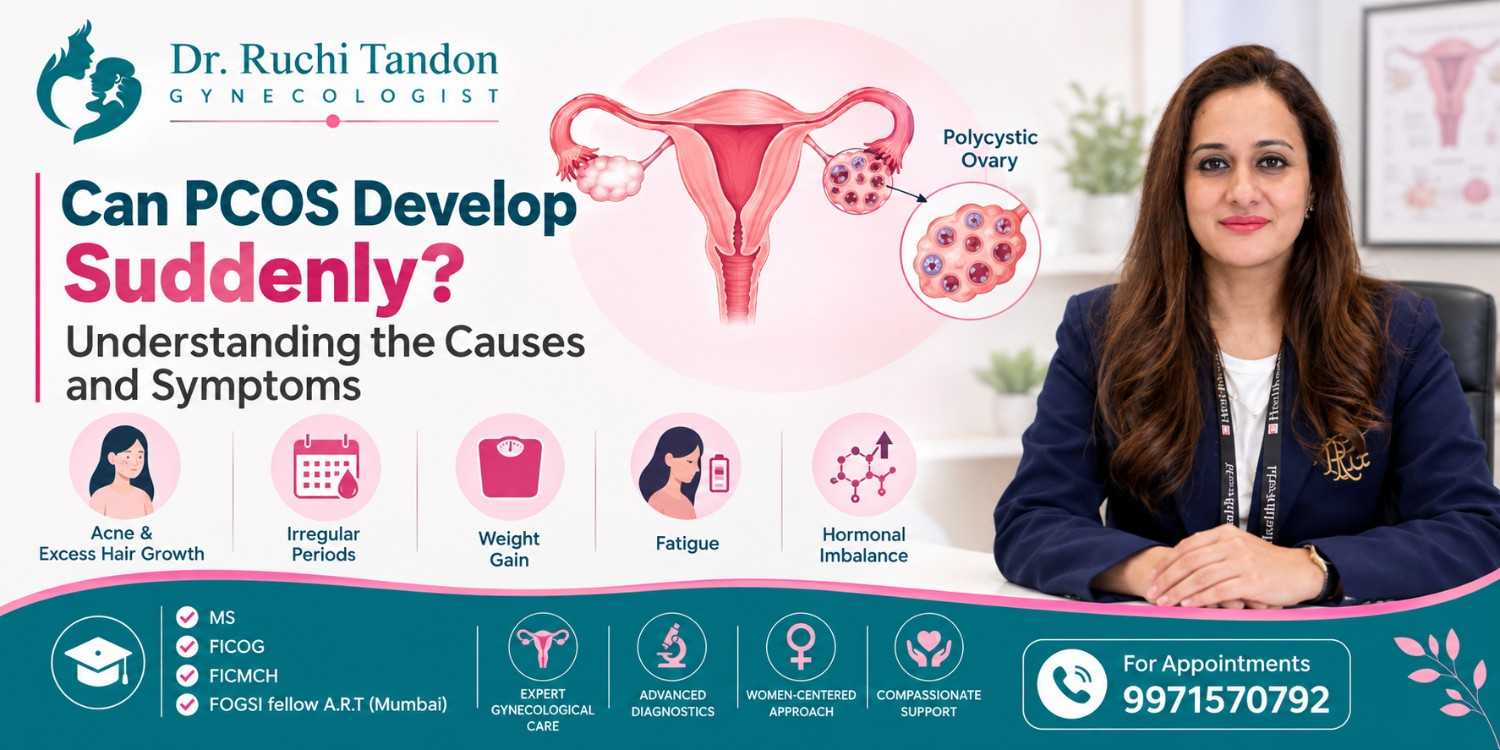
Polycystic ovary syndrome (PCOS) is a common hormonal and metabolic condition that can affect women during their reproductive years. One question many women ask is, “Can PCOS develop suddenly?” The answer is more nuanced than a simple yes or no. PCOS does not usually appear overnight, but its symptoms can become noticeable quite suddenly, even when hormonal changes have been developing gradually.
Why Can PCOS Symptoms Seem to Appear Suddenly?
PCOS is associated with hormonal imbalance, insulin resistance, irregular ovulation and, in some women, increased androgen levels. These changes may remain subtle for some time before symptoms become noticeable.
Changes in weight, stress, sleep patterns, physical activity, diet and certain medications can sometimes influence hormonal balance and make existing symptoms more apparent. Some women may suddenly notice irregular periods, increased facial or body hair, persistent acne, or difficulty conceiving.
However, these symptoms do not automatically mean PCOS. Thyroid disorders, elevated prolactin, perimenopause, certain medications, and other hormonal conditions can cause similar changes. A proper medical evaluation is therefore important before assuming that PCOS is the cause.
What Are the Common Symptoms of PCOS?
PCOS can present differently from one woman to another. Common symptoms include:
- Irregular, delayed, or missed periods
- Excess facial or body hair
- Persistent or adult-onset acne
- Unexplained weight gain or difficulty losing weight
- Hair thinning or increased hair loss from the scalp
- Darkened skin, particularly around the neck or folds
- Difficulty with ovulation or conception
Not every woman with PCOS experiences all of these symptoms. Some may primarily have menstrual irregularities, while others may seek medical advice because of fertility concerns.
How Is PCOS Diagnosed?
There is no single test that confirms PCOS in every patient. A gynecologist generally considers the menstrual history, symptoms, medical history, and physical findings. Depending on the situation, blood tests may be recommended to assess hormone levels and exclude other conditions. An ultrasound may also be advised when clinically appropriate.
Importantly, having polycystic-appearing ovaries on an ultrasound does not necessarily mean that a woman has PCOS. Diagnosis should be based on the overall clinical picture rather than one finding alone.
When Should You Consult a Doctor?
If your periods have become consistently irregular, you develop unexplained excess hair growth or acne, or you are experiencing difficulty conceiving, it is sensible to seek professional advice. Consulting a qualified gynecologist in South Delhi can help identify whether PCOS or another hormonal condition is responsible.
Women planning pregnancy should also discuss persistent menstrual irregularities or suspected PCOS with their doctor. If pregnancy involves additional medical concerns, seeking advice from experienced high risk pregnancy doctors in South Delhi may be appropriate.
PCOS Treatment Is Individualised
PCOS treatment depends on your symptoms, reproductive goals and overall health. Management may include lifestyle modifications, medicines to regulate periods or address androgen-related symptoms, and fertility treatment when pregnancy is desired. Early evaluation can help manage symptoms and reduce the risk of longer-term complications.
If you are looking for the best PCOS doctor in South Delhi, choose a specialist who takes a comprehensive approach rather than focusing only on individual symptoms. Similarly, PCOS treatment in South Delhi should be tailored to your specific hormonal, metabolic, and reproductive needs.
PCOS may not truly “develop overnight,” but its symptoms can become noticeable quickly. Recognising the changes and getting an appropriate evaluation can help you understand what is happening and choose the right treatment approach.