
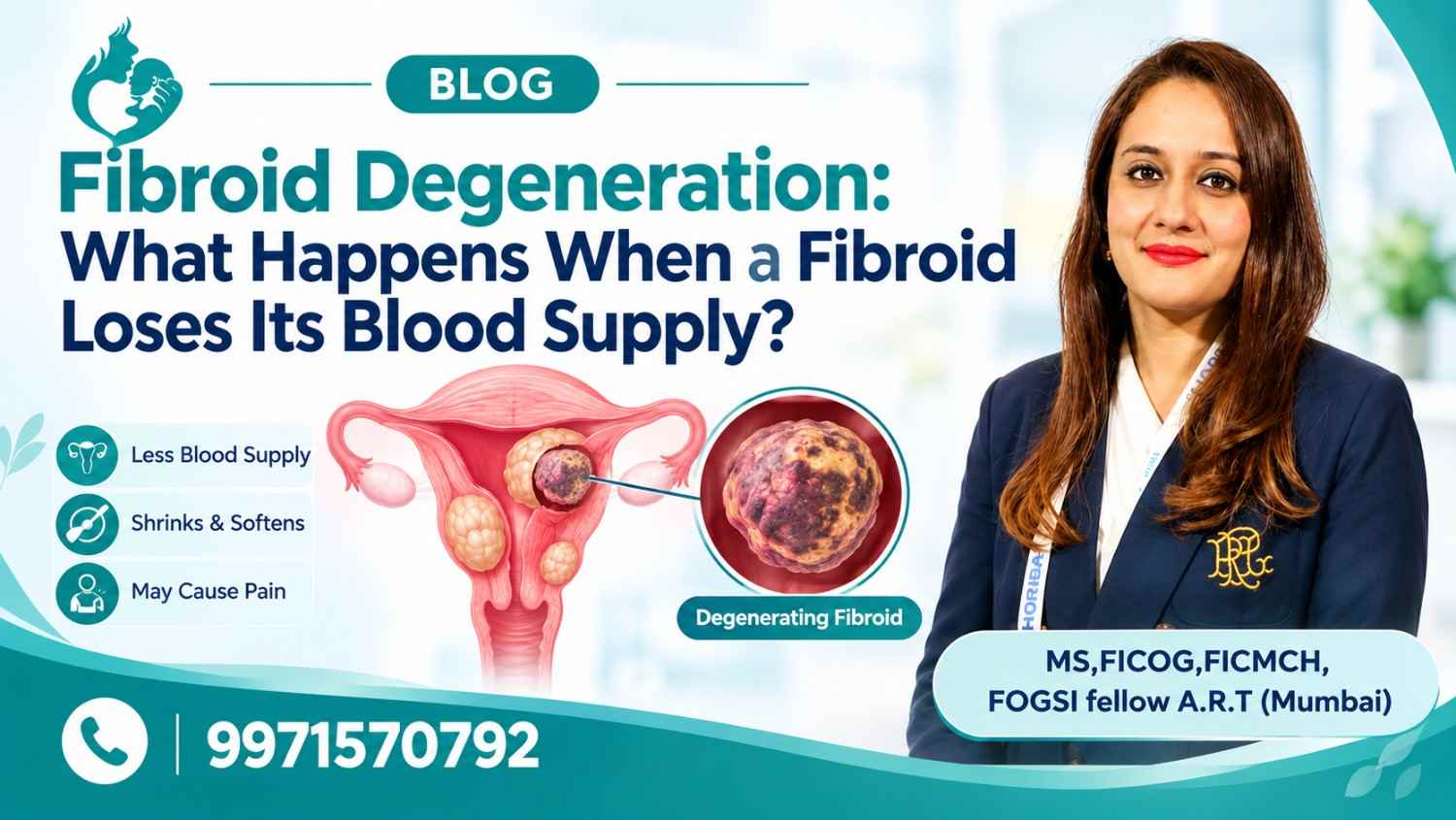
Uterine fibroids are non-cancerous growths that develop in or around the uterus and may cause symptoms such as heavy menstrual bleeding, pelvic pressure, abdominal discomfort, or frequent urination. When a fibroid grows faster than its blood supply can support, part of the fibroid may receive inadequate oxygen and nutrients, resulting in fibroid degeneration. If you are experiencing sudden or persistent pelvic pain, consulting the best fibroid doctor in South Delhi can help determine whether degeneration or another condition is responsible.
What Is Fibroid Degeneration?
Fibroid degeneration occurs when the blood supply to a fibroid becomes insufficient. Since fibroids are dependent on blood vessels for oxygen and nutrients, reduced blood flow can cause changes within the fibroid tissue.
Degeneration does not mean that the fibroid has become cancerous. In most cases, it is a benign process associated with the fibroid outgrowing its blood supply. It can occur in different forms, with red degeneration being particularly associated with pregnancy and sudden pelvic pain.
Why Does a Fibroid Lose Its Blood Supply?
Several factors may contribute to reduced blood flow to a fibroid. Rapid fibroid growth can cause its internal blood supply to become inadequate. Changes in the uterus during pregnancy may also affect circulation around a fibroid.
In some situations, degeneration can occur after procedures that intentionally reduce the blood supply to fibroids, such as uterine artery embolization. The resulting reduction in blood flow causes the fibroid to shrink over time.
What Are the Common Types of Fibroid Degeneration?
| Types of Degeneration | What Happens | Possible Symptoms |
| Red Degeneration | Blood flow and oxygen supply become reduced, causing tissue changes | Sudden pelvic or abdominal pain, tenderness |
| Hyaline Degeneration | Fibroid tissue develops areas of decreased cellular activity | Often no symptoms; may cause pressure |
| Cystic Degeneration | Degenerated tissue can develop fluid-filled spaces | Pelvic discomfort or pressure |
| Calcification | Calcium deposits develop within an older or degenerating fibroid | Usually few symptoms |
What Symptoms Can Occur?
The symptoms depend on the type, size, and location of the fibroid. Some women may not experience any noticeable symptoms. Others can develop sudden pelvic pain, abdominal tenderness, low-grade fever, nausea, or a feeling of pressure.
Pain caused by degeneration may gradually improve as the inflammatory response settles. However, severe, persistent, or rapidly worsening pain should not automatically be attributed to fibroids because conditions such as ovarian problems, pregnancy-related complications, or pelvic infections can produce similar symptoms.
How Is Fibroid Degeneration Diagnosed?
A gynecologist in Greater Kailash may evaluate your symptoms and medical history before performing a pelvic examination and imaging, commonly an ultrasound. Depending on the clinical situation, MRI may provide more detailed information about the fibroid’s location, size, and internal characteristics.
The treatment approach depends on the severity of the condition and diagnostic report. For women seeking fibroids treatment in South Delhi, a gynecologist may recommend observation and symptom management when degeneration is uncomplicated. Persistent symptoms or large, symptomatic fibroids may require further treatment based on individual factors such as age, fertility plans, fibroid location, and severity of symptoms.
When Should You See a Doctor?
Sudden severe pelvic pain, heavy bleeding, fever, fainting, or pain associated with a possible pregnancy warrants prompt medical evaluation. Even when symptoms appear consistent with fibroid degeneration, proper assessment is important because several gynecological conditions can have overlapping symptoms.
Conclusion
Fibroid degeneration is generally a benign change that occurs when a fibroid does not receive enough blood supply. Although it can cause significant pain, the condition does not automatically indicate cancer. Timely evaluation can help identify the cause of symptoms and determine whether monitoring, medication, or a procedure is appropriate. Women with concerns about fibroids or related hormonal symptoms can also discuss their overall reproductive health with a qualified specialist, including the best PCOS doctor in South Delhi, when PCOS-related concerns coexist.