Polycystic ovary syndrome (PCOS) and thyroid disorders are two common hormonal conditions that can affect women during different stages of life. Although they are separate health conditions, their symptoms can sometimes overlap. Irregular periods, unexplained weight changes, tiredness, mood changes, and difficulty conceiving may occur with both, making it difficult to understand the underlying cause without proper evaluation by a PCOS doctor in South Delhi.
Knowing the differences between PCOS and thyroid problems can help women seek appropriate medical care instead of relying only on symptoms.
PCOS and Thyroid Problems: What Is the Difference?
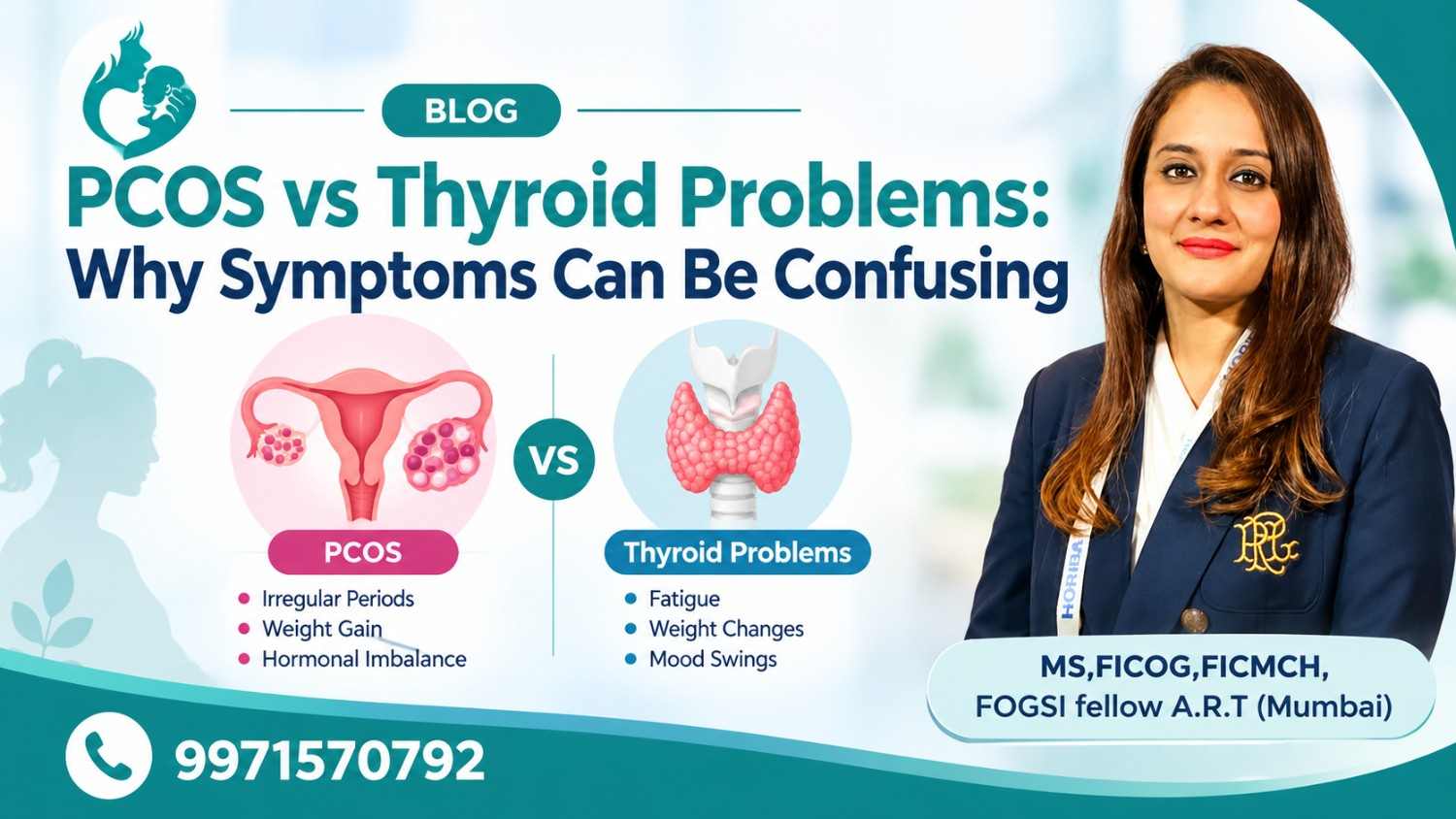
PCOS is a hormonal and metabolic condition often associated with irregular ovulation, increased androgen activity, and changes in insulin sensitivity. Common symptoms may include irregular or absent periods, acne, excessive facial or body hair, weight gain, and fertility difficulties.
Thyroid disorders occur when the thyroid gland produces too little or too much thyroid hormone. Hypothyroidism, in particular, may cause fatigue, weight gain, dry skin, constipation, menstrual changes, and difficulty conceiving. Hyperthyroidism can cause symptoms such as unexplained weight loss, anxiety, increased heart rate, sweating, and menstrual irregularities.
Because menstrual and metabolic symptoms can overlap, a clinical assessment is important.
Why Can PCOS and Thyroid Symptoms Look Similar?
Hormones influence several systems in the body, including menstruation, metabolism, energy levels, mood, and reproductive health. Therefore, an imbalance involving the ovaries or thyroid gland may produce similar symptoms.
For example, a woman with PCOS may experience irregular periods and weight gain, while hypothyroidism can also contribute to menstrual irregularities and changes in body weight. Both conditions may also be associated with fertility problems.
However, symptoms alone cannot establish whether a woman has PCOS, a thyroid disorder, or both.
| Symptom | PCOS | Thyroid Problems |
| Irregular periods | Common | Possible |
| Weight changes | Common | Common |
| Acne/excess hair growth | More characteristic | Less typical |
| Fatigue | Possible | Common with hypothyroidism |
| Fertility difficulties | Possible | Possible |
| Thyroid test abnormalities | Not diagnostic | Common |
How Are PCOS and Thyroid Problems Diagnosed?
A gynecologist may review your menstrual history, symptoms, medical history, and physical findings before recommending appropriate investigations. Depending on the situation, blood tests may include thyroid-stimulating hormone (TSH), free thyroid hormone levels, glucose-related tests, and other hormone assessments.
PCOS diagnosis is based on clinical assessment and established diagnostic criteria rather than a single blood test. Ultrasound may be recommended in selected cases, but the presence of polycystic-appearing ovaries alone does not necessarily mean a woman has PCOS.
If symptoms suggest an underlying hormonal problem, consulting a qualified and best gynecologist in South Delhi can help identify the appropriate diagnostic pathway.
When Should You Consult a Doctor?
Persistent menstrual irregularities, unexplained weight changes, excessive hair growth, acne, ongoing fatigue, or difficulty becoming pregnant should not be ignored. Early evaluation can help identify the underlying cause and guide appropriate management.
For women diagnosed with PCOS, PCOS treatment in South Delhi may include lifestyle changes, menstrual cycle management, treatment for androgen-related symptoms, metabolic assessment, and fertility-focused care when required. Treatment is individualized according to symptoms, reproductive goals, and overall health.
A qualified gynecologist in Greater Kailash can also help determine whether thyroid testing or other investigations are appropriate when symptoms overlap.
Final Takeaway
PCOS and thyroid disorders can share several symptoms, particularly changes in menstruation, weight, energy, and fertility. However, they have different underlying causes and require different approaches to management. If you are experiencing persistent hormonal or menstrual symptoms, professional evaluation is more reliable than trying to identify the condition based on symptoms alone.